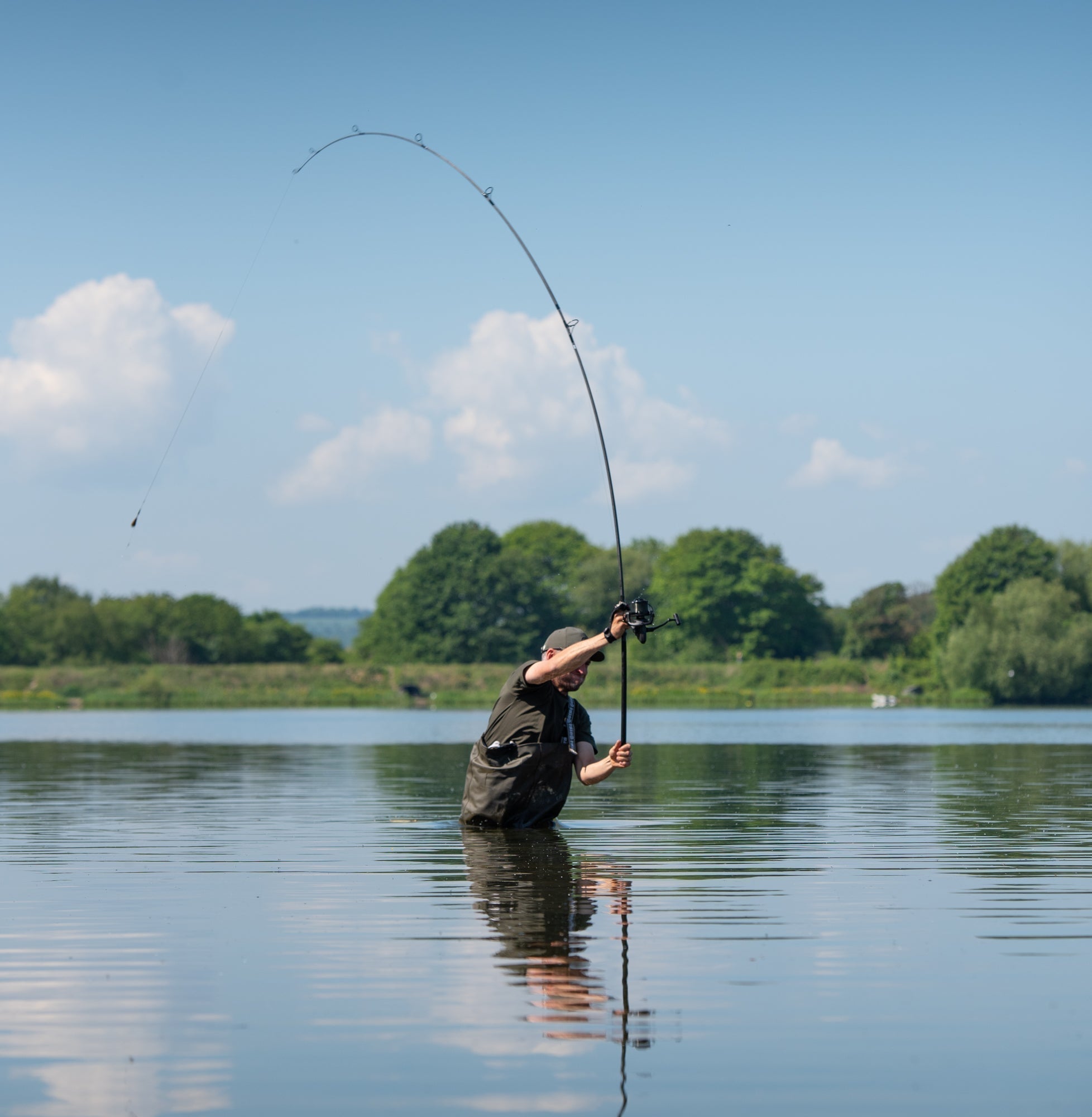
Angling coaches spend countless hours helping people become better anglers. From teaching complete beginners the absolute basics, to refining the skills of experienced fishers, they develop a deep understanding not only of fishing itself, but how people learn.
Here at Wychwood we're fortunate to work with some of the UK's most respected angling coaches, each specialising in different disciplines. We asked them to share the advice they return to time and time again — the lessons they believe make the biggest difference.
Meet The Coaches

Julian Chidgey A South West-based guide and coach, Julian specialises in a whole range of angling styles and helps anglers of all abilities read the water, simplify their approach, and make the most of every session. |

Andy Taylor With over two decades of teaching experience, Andy is a game fishing specialist who has helped countless anglers — from complete beginners to seasoned fly fishers — to sharpen their skills on stillwaters and rivers alike. |

Richard Granger A seasoned game fishing coach based at Ladybower Reservoir, Richard works closely with the British Disabled Angling Association and Fishing For Heroes, using angling as a tool for wellbeing and personal development. |

Thom Finney Former Wychwood media and comms coordinator turned full-time coach and guide, Thom has worked with SEND students and covers predator and fly fishing across some of the UK's most challenging inland waters. |
Andy Taylor
Here are some tips I pass onto my clients with regard to game fishing, whether they're total novices or just anglers who want to improve:
- The closer you get to the fish; the greater the investment. This is probably something that applies to all forms of fishing not just fly fishing. Over the years I've had many clients turn up for tuition with the best rod's, reels and lines and fish with the worst leader material and flies that will guarantee a blank! By the best leader material you can — material which has a low diameter, is supple and has good knot strength. Over the years I've tried many different types and have now settled on Wychwood Ghost Mode fluorocarbon for 95% of my fishing. 9lb for the reservoirs, 6lb for small stillwaters and 4lb for river nymphing. As for flies focus on a dozen patterns for the discipline you do and get three of each. Understand how to fish these and get confidence in them. Buy from good suppliers. If you're paying less than £1 — there's a reason!!
- Try before you buy. I must have typed these words a thousand times since I first started teaching 26 years ago! If you're starting out then find an instructor who has a range of rods and lines for you to try. Every rod and line is different — find one that suits you. As a basic guide a 10ft 7wt is ideal for large stillwaters; a 9ft 6in 6wt is perfect for small waters and a 9ft 3wt and a 10ft 3wt are the general go to rods for the river angler.
- Blanking is normal! Don't worry if you don't catch — it happens to us all. It's easy to get drawn in by social media where it feels like everyone is catching and catching loads! There are days where the fish just won't be interested — unfortunately in fly fishing these are those bright sunny days. There is a saying in fly fishing which has been around for decades; "bright and breezy is never easy" so steer clear of those sunny days. Overcast days are by far the best!
Julian Chidgey
Even though my coaching sees me show many different skills and techniques to anglers, carp fishing continues to be an area of the sport that people want to know more about - here are my top three tips that I always pass on to anglers joining me in search of carp during the warmer months:
- Location is everything! Don't rush to set up in a swim, spend time looking for signs of fish first. This is the most important time you will spend on any session. Whether it's coloured water, bubbles breaking the surface, reeds knocking, or fish on the surface the clues are there!
- Keep it simple! Modern carp fishing can appear very confusing but simple, proven techniques will produce time and again. Find a couple of rigs that you like and learn when to use them and you won't go too far wrong. Don't go down the rabbit hole of looking for a magic rig that doesn't exist.
- Always take your surface gear. There's always chances to be made at this time of year on the surface so make sure you have a suitable lighter outfit for this method. Many people make the mistake of thinking this is a method for the middle of the day, yet so often the best floater results are at first and last light. Being a visual method, you also learn a lot about their behaviour as you can see how they respond to your bait and rig which speeds up your learning process when compared to fishing 'blind'.

Richard Granger
Most of my coaching is on Ladybower Reservoir where health and safety plays a huge part prior and during a session, due to the reliance on boats for much of my coaching. Working with the BDAA, and also supporting Fishing For Heroes, guiding those with PTSD in their wellbeing, means there's more than just catching fish at stake.
My advice can be applied to general fishing but for those anglers who actually want to get into coaching, here is some valuable info to consider if you want to help and assist others:
- Remember: it's your qualification. Take ownership of your coaching and the standard you deliver. Being the best means listening, learning all the time and striking up a great rapport with your client.
- Know your environment and understand the venue, the conditions, and any potential risks before the session starts. Health & safety is at the heart of delivering great coaching, so even the small things like ensuring they have a hat and sunglasses/protective eyewear, and that you're carrying a small first-aid kit, can make things much smoother — no fishing session is worth a client's safety and well-being.
- Pre-planning your session content can pay dividends so clients get the full benefit of your knowledge and skillset. Of course you can always react to changes in conditions or fish behaviour, but thinking about how to get the most from the session will make you a better coach.
- Knowing the venue's history is something that you can learn over time, but doing homework prior to a session is very useful. Once clients relax, they often start asking questions about the venue and its background and if you can answer those questions with authority, it puts them even further at ease.
- Don't overcomplicate the setup. I provide clients with a rod already assembled and the reel seated, then demonstrate the basics clearly. Many of my clients have never fished before so it's about keeping things simple — digging down into more advanced aspects of fishing is for when they're further along their fishing journey.
- Explain the tackle. Make sure clients understand the importance of how tackle works as a system, balancing equipment to provide not only the best fish-playing experience, but so the general use of the kit doesn't feel awkward or counter-productive. Before we even tie on a fly we get the basics of casting right so the client can feel how the rod, line and reel work together. It builds their confidence.
- Give people space. Be prepared to step back and let clients relax and communicate. Not everyone wants a coach standing on their shoulder.
- Establish expectations. Find out what they want from the session and whether those expectations are being met. Ask for feedback and take it ALL in — knowing where you're getting things right (and wrong) is how you become a better coach.
- Have a Plan B. My sessions are usually four hours long and follow a structured routine, but conditions — and people — can change during that time, so having a flexible mindset is essential to ensure a client leaves the session enriched.
- Most importantly, help your client relax. They've booked you for a reason — confidence and enjoyment are just as important as instruction and as anglers, we want them to progress, enjoy the sport of angling, and forge a desire to continue to go fishing.
Thom Finney
Having worked as a full-time angling coach with SEND students and as a freelance fishing guide covering both predator and fly fishing, here are three key pieces of advice I follow:
- Presentation over distance. Probably one of the most common things I see when guiding or coaching someone new to fly fishing is the client trying to get as much distance as possible with the cast, which often ends up in a messy heap and can lead to frustration. Distance takes time and practice — I always encourage starting with a short, manageable amount of line and focusing on getting the cast to land straight and gently. A straight and well-presented 20-foot cast, where your leader turns over and your fly is fishing straight away, is far better than a sloppy 40-foot cast where you lose half the retrieve just getting the line straight. Once the client is casting a straight line, I gradually increase the distance by a short amount.
- Master the techniques — catching is a bonus. For many years I have taken clients predator fishing on vast inland waters; personal bests have been broken and red letter days have been had, but the reality is you do get blank days. My main goal is to show clients my top methods for the venue, the target species, and the time of year, and get them fishing these the right way. Whether they catch or not, they can learn from the day and replicate it on their next session. When a client has a blank day but three weeks later sends me a photo of a nice fish caught on a method I showed them — that makes me just as happy as if they'd caught on the day. If you've ever just wanted to give fishing a go, just do it!
- Angling IS mindfulness. Picking up a rod to unwind and find your focus can't be underestimated in our fast-paced world. The water forces you to slow down, and fishing is the ultimate mindfulness practice — demanding your full attention while lowering your stress levels instantly. You don't need expensive gear to start. Angling teaches resilience, builds patience, and rewards you with a profound sense of achievement when you land that first catch. It connects you deeply to nature and a supportive community. Give it a go — the water is waiting, and your new passion is just one cast away!