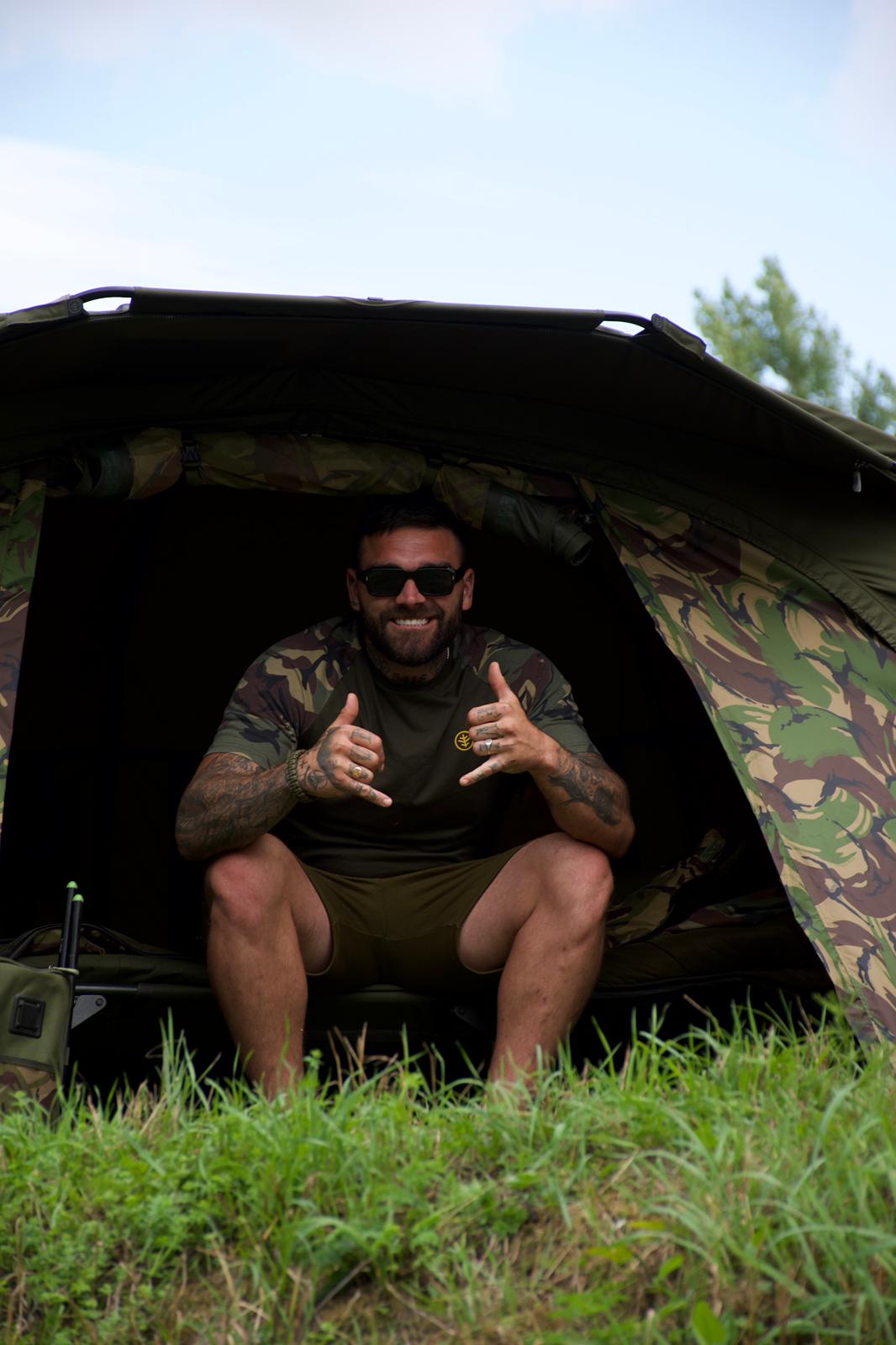
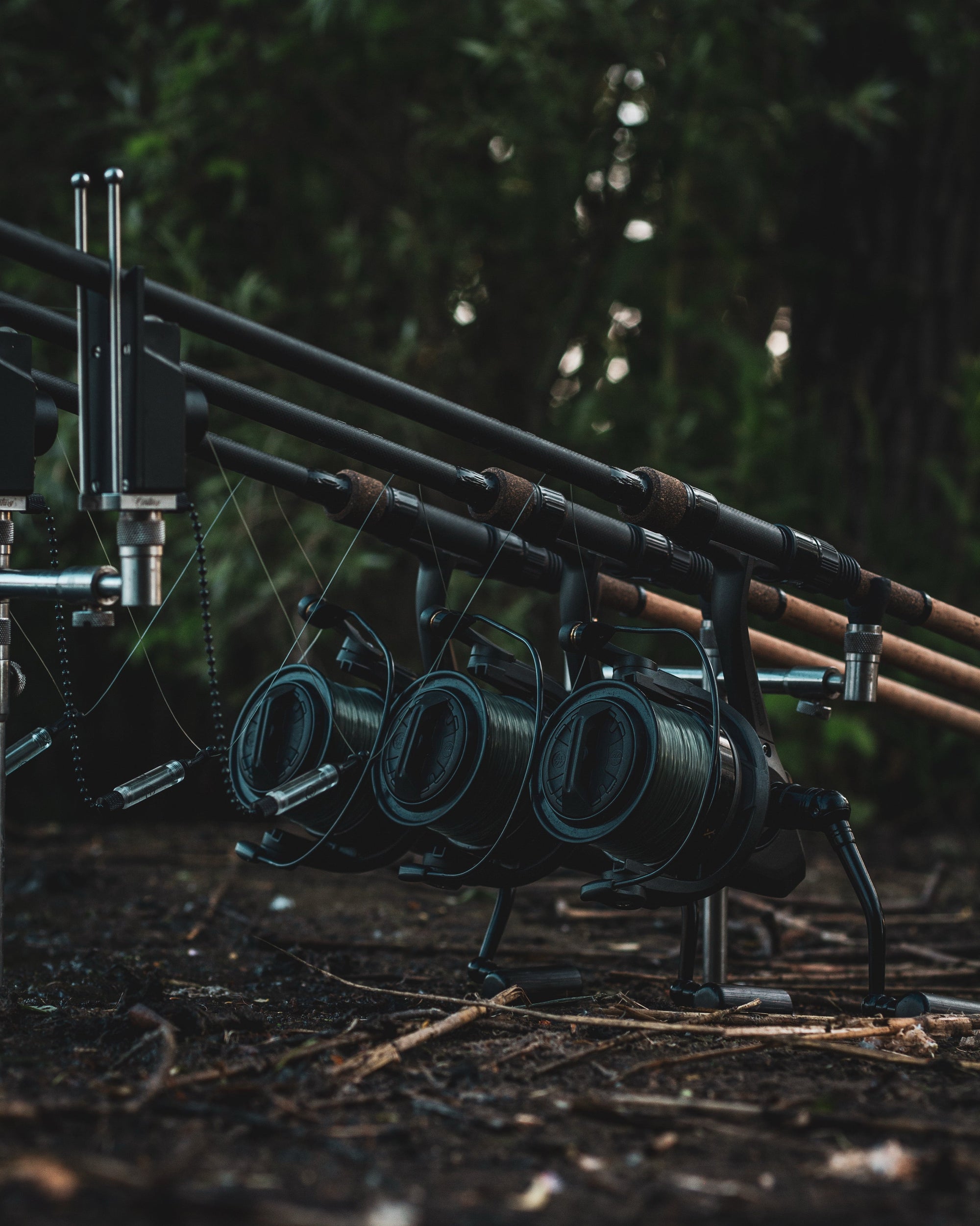
Catching carp isn’t just about getting to the water, flinging a rig out and sitting there with fingers crossed in the hope of a take. Wychwood’s Rob Gibson is a man who’s been there and done that, but has crafted a method for maximising potential based upon moments of clarity, Eureka moments he calls them…

Time is the most precious thing we have and this really applies to Angling, making the most of my time on the bank dramatically increases the odds of me catching the Carp I really value and want in my album. The waters I tend to favour are no easy task and I really cant afford to make mistakes or waste my time, especially with the long drives from north of the wall! Ive got to maximise my efforts and apply some rules and tools of the trade to my angling, now that’s not to say that these simple steps wont work elsewhere as they most certainly will! And id love to think that a little bit of this knowledge may just help you catch a few more carp….
OBSERVATION
The first time I set foot on a big windswept pit I began some sort of odd transformation, evolving from the static ‘bait and wait’ approach into a much more rounded angler, or so that’s how I see it. I can remember the moment it all clicked and started to make sense and it was all down to observing what’s going on both above and below the surface. The simplicity of peeling those eyes away from that soul destroying social media and applying yourself to watching the water doesn’t only benefit your mindset and soul, but also drastically increases the opportunity of actually coming into contact with those mythical swimming creatures we seem to chase about. Now, Carp are creatures of habit, often showing at certain times of day and in certain areas of the lake and unlocking this can be the key to your latest campaign; I love a good set of polarised sunnies and a decent hat to reduce the glare, but the biggest tip I can give was actually given to me by Dave Levy and that was to focus on the far bank - that way anything in between you and the far bank will register in your vision! Nifty eh? Yeah, yeah, it doesn’t sound like rocket science but that watching that space between you and the far bank IS fishing; it may not be the actual act of casting or tying a rig, but of anything that carp anglers do, time spent looking at the things that are happening out in front can be the key to unlocking a venue. Watching the wildlife is not only a lovely way to pass the time, it can also be very important in locating those Carp, quite often the birds will react in very different ways that can most certainly give the came away. Large groups of tufties or ducks are most likely there because they are eating the bits the carp are stirring up off the bottom below them, when they dive look for them showing signs of alarm or stress when they surface and finally listen out for the Coots at night as if you don’t hear the show, youll certainly hear the birds reactions!
INFORMATION
Facebook groups, word-of-mouth, stuff you witness – on any water it all goes into the pot of stuff that could help you in the long run, but when there’s too much info then it can create a cloudy, muddled overview that can be hard to get a handle on. That’s even worse when you know nothing about a venue, as you’re going on face-value more often than not and you don’t quite know what is ‘valuable’ as far as knowledge goes. A new venue can be awfully daunting - the apprehension has been known to get the better of me - but I’ve learnt now after all those years of “dropping my trousers” too early that proper preparation prevents…well, you know the rest. I drummed it into my head a few years ago whilst fishing a forgotten North Norfolk gem that if I studied the maps I’d figure out exactly where I needed to be in certain weather conditions. Now, this may sound incredibly basic but when you are driving for four hours to fish, it’s essential to give yourself the best chance and make the most of your time! I had an A4 printed ariel photo of said lake and drew on exactly where the wind would be blowing in certain conditions. T all sounds very boy scout stuff but having a visual aid can help you overcome the problem of being at lake level, where it’s not always obvious how the weather is affecting a venue as a whole. As many of us know, weather is often the deciding facto in whether you will catch a carp so by taking this approach, after a few trips I’d investigated and noted down a few options for spots that covered most weather conditions, so I was always ready no matter what the conditions, stacking the odds in my favour. Since then this has become the norm; I find it so exciting to get this mapping sorted early and my spots prepped/investigated and it really makes up a big part of the preparation for me now. Don’t get me wrong I do listen to the info on previous captures and suchlike, but actually I find the most rewarding option to be the process of doing it myself.<
BAIT
I’m not going to sit here and preach to you that there’s a wonder bait that’s going to have the carp in your local pit weak at the fins however I can say this, my approach to understanding bait in the last few years has TRANSFORMED my results. I put this down to two primary contributing factors and they are quality and most importantly confidence! Never in my angling have I been so confident in my bait and that removes what I perceive to be 25% of the chances of catching, so let me elaborate. In my humble opinion catching carp is 50% is location 25% bait and 25% conditions related; I’ve seen it way too many times that you’ve got the right bait, on fish and you don’t get a bite in silly conditions for it to be a coincidence? But anyway back to that 25% share in the bait - you have to be confident that what you are using is something that not just smells good to you but also has appeal to the carp, meaning something they positively love to eat. My primary approach in the past few years has been based around the ever faithful RG Baits crab and it’s really something I would take anywhere at any time of year. It’s done remarkably well for me with results right through the year since I started using it and I’m absolutely loathe to change, despite the fact that the boys at RG have some phenomenal stuff in the pipeline. The way bait is applied is about the only thing that changes for me through the year; during the Spring I like to add a few bits to the mix, including Himalayan salt and the GLM powder, the Green lipped mussel really adds that extra boost of attraction to the baiting with its natural attractor profile. During Summer I like the addition of a handful of DK’s G-Buzz because I love the mix of birdfoods and seed particles, the fish just cant get enough of his mix and im convinced it gives me a huge edge . As the year tails off I tend to scald the bait with boiling water, so it goes soft, and add a handful of red maggots or casters to give it the little edge it so deserves. These natural baits feel much more in keeping with the time of year when fish are less likely to gorge themselves and having some small, natural offerings holds their attention at a time when their appetites might not be so huge. 4. LINE CHOICE This one may seem terribly basic and I have absolutely no intention of teaching anyone to suck eggs. However, there are a few distinct advantages and disadvantages to mainlines that I deem it important enough to try and impart some wisdom, so here goes…… let’s start with Winter, as it’s arguably my favourite time. To be honest if I could just use fluorocarbon I would; its super-heavy, nigh-on invisible and generally has incredibly low stretch, which makes it the perfect option for those tricky, clear waters that I love. However, it does have some distinct disadvantages, such as it casts like steel winch wire up to around 100yds and its not the most robust, meaning it has to be cared for and looked after, something us carp anglers are not renowned for (just being honest). You really need to make sure it doesn’t kink and it gets cleaned after each use, otherwise you will dramatically reduce the life span of the line and we all know that it’s not the cheapest thing to have to buy. With this in mind, there’s the subject of braid. In the right hands it’s a fantastic piece of kit but I can understand why many fisheries on the day ticket circuit don’t allow it because of its wire-like nature and ability to damage fish. That aside – and I say this based upon the user having a level of knowledge for its use - it has some mega properties that I can certainly get on board with; zero stretch, it sinks like a stone, not to mention it is fantastic to play fish on and in my opinion it’s essential for boat use as playing fish from the boat I can feel every lunge and movement below the surface, it also picks up on the retrieve and cuts through the weed with no issue. Finally we come onto monofilament. Now, for me mono is something I try not to use and that is just down to personal preference. I know that there are some fantastic products available but it’s just not for me. Although fantastic for casting and very durable, it’s just got too much stretch for me and a lack of control I’m not a fan of. For range fishing that’s a massive mark against it. 
POINTS AND PATTERNS
The emphasis on hook points and their sharpness has been growing for years and I think quite rightly so - can you imagine going down to the local GP and the nurse tries to keep you calm whilst forcing a blunt needle into your skin? Me neither! So it makes; sense not to chuck out a blunt hook, right? I always take the time to check the hook point;it seems just such a basic thing to do but in my mind it gives total confidence once that rig is out there However, a sharp hook shouldn’t just be the end of it; the rig you use should always be a consideration but as much as anything, a surgically sharp hook fished over a tough bottom substrate such as gravel, there’s a high chance you are going to burr over that point regardless if you’re using a traditional bottom bait rig. In that instance I favour a curve point to at least minimise those chances, so it’s more about the design of hook than the hook being sharpened. When it comes to chod rig or fishing a popup that’s sat off the bottom, in my eyes these always warrant the hook point being sharpened because they have to work with more less resistance so need to ‘catch’ the inside of the mouth at the merest touch. Recently hooks have become way better straight from the packet, with most being absolutely fine to use straight from the get -go. However, I just prefer to fish knowing that I’ve stacked all of those percentages in my favour. As for the pattern of hook being used, with so many currently available on the market it seems so important to me to stick with what I know and trust; I use an out turned eye or a beaked point/wide gape style pattern for all of my fishing now and I base that totally on trust in those specific hook patterns. Stick with what you know and trust and the rest will come good! Hopefully…
BE ORGANISED
Having yourself together is important at all times of year but it becomes even more important when things start to cool off, ensuring you keep warm and morale is high being key to winter success. As you can probably tell I like to be prepared, there’s enjoyment to be had in getting that kit ready to go a few nights before and that dopamine hit can really do you some good. Getting all of my Wychwood tactical pouches sorted out and everything in the right place is a great thing to do in the lead up to that first Winter session; I like to get the bag off the bed and into the house to air out for a few days before, the hot water bottle ready and in the bottom of the bag, sometimes even treating myself to a freshly washed pillow case! I know I’m really pushing the boat out here, but these little things make those cold nights all the more comfortable. Whilst the preparation of tackle means you are maximising the amount of rod hours you have at your disposal, absolutely essential on these short days. The same goes for bait, you can prep any bait a few days before going at this time of year and I’ve found that to be a real edge! The softer the bait the better and sometimes a kettle of boiling water over a few kilos of boilie a couple of nights before the session can make that difference! Followed by a few secret liquids of course, I mean that’s obvious right? Its also worth stripping down the gear, take out all the unnecessary stuff that clogs up the bags and leads to poor decisions, a choice of a few hookbaits and rigs leads to better concentration and it can really make all of the difference.
 DEDICATION
They say on average it takes 10,000hrs to become an expert in anything - that’s 416 days - so technically, for the slightly older amongst us we have absolutely no excuse! You have to put time and effort into any craft to become at least consistent and that definitely comes into carp angling. You simply can’t expect to have results every time if you get out once every two months and although I totally appreciate that’s all the time that some people have I also know that unlocking certain waters can take a lot longer. Not all of the hard work has to be done on the bank though! As I’ve outlined above there are plenty of things you can do in preparation for that session but let’s all just take a moment, sit back and remember that buzz that makes us all love this sport, that sheer joy of just being there and doing it, having an absolute stinker of a session and then getting home to sit down in the warm only to find that all you can think about is the lake! That’s the crux of it. Even when the going gets tough, just keep on going and push through the blanks – blanks happen, they’re part of the man Vs fish game. I find the more I apply myself to a venue the more into it I actually get. You start to notice patterns in behaviour, shows at certain times, even the bird life may play a pivotal part in that final capture; keep watching, keep dedicated and keep on the ball. Hopefully a few bits of advice can be peeled from these pages, I’ve tried to impart as much wisdom as I can in these short sections and I really hope that it helps to put a few more fish on the bank in the future, enjoy the winter and all it has to offer.
Rob